
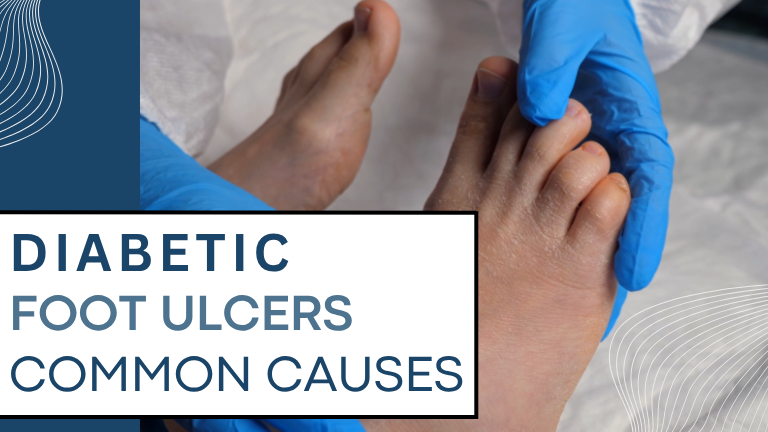
Hello and welcome to the NEWCare Learning Center. Here you’ll find short, educational pearls about wound and ostomy care written by Dr. Waien and our NEWCare team. Today’s question is “what are the different causes that can lead to the development of diabetic foot ulcers?”
There are many different causes/pathophysiological factors that can lead to the development of diabetic foot ulcers. Here are a few:
This term refers to the development of numbness to pain. It often occurs because of chronic high blood glucose levels which lead to damage to the peripheral nerves. This loss of protective sensation can result in patients who may not be able to feel pain from cuts, pressure, or burns. Repetitive unnoticed trauma can lead to skin breakdown and formation of an ulcer.
This term refers to the reduction in blood flow to the extremities which can lead to poor oxygen levels and poor nutritional delivery to the peripheral tissues. This can result in tissue breakdown, and it can also lead to delay in wound healing.
Diabetes can lead to the development of a foot deformity such as Charcot foot. Those who have foot conditions, such as hammer toes and bunions routine, often carry high amounts of pressure on the foot which can lead to transformation. Overtime, this transformation can result in skin breakdown and in many cases, the development of an ulcer.
The wearing of ill-fitting shoes, walking barefoot, minor cuts, blisters or burns can lead to the development of a foot ulcer. When repetitive trauma or injuries are combined with underlying peripheral artery disease, it can delay or even prevent wound healing.
It’s important to stay on top of any infection. Bacteria can invade even the smallest wounds and lead to deterioration of the wound and the adjacent healthy tissue. It is important to protect your wounds by applying the appropriate dressing that has been prescribed by your healthcare provider. It is also important not to soak your feet or walk barefoot in ponds and lakes when you have open wounds.
Poor glycemic control or high blood sugar levels impair your immune response. Poor glycemic control can also impair the development of collagen and tissue repair. This can impede or prevent your wound from healing.
We have outlined a number of factors in this series. It’s important to remember that often more than one factor is present. Unfortunately, these factors can work in combination. These factors not only cause the development of an ulcer but can also prevent the healing process.
Do you need care? Do you need care for a diabetic foot ulcer in Greater Springfield or Western Massachusetts? We have 5 convenient office locations. Please reach out to us at New England Wound Care today. Our number is 413-475-3233 or you can visit us online: https://newenglandwoundcare.com/contact-us/.
At New England Wound Care, or NEWCare, our specialized team has over 30 years of experience providing comprehensive wound & ostomy care throughout Western Massachusetts and Greater Springfield. Our offices are located in Westfield, East Hampton, Florence, Amherst, and Greenfield. Click “here” to schedule an appointment with us today.
Remember to follow New England Wound Care on Facebook and Instagram for videos and content about wound and ostomy care.